
Semantic AI Search Optimization: Redefining Intent Driven Search
Semantic AI search optimization now reshapes how search engines judge visibility, relevance, and trust across every query you publish.
Older systems matched keywords and counted links, often missing what you actually meant to answer.
Today, AI models use NLP, vectors, and behavioral signals to understand topics, context, and real intent. According to Supabase, “Semantic search is useful in applications where the depth of understanding and context is important for delivering relevant results”.
That shift changes how your content is interpreted, ranked, and trusted over time.
Confusing?
It does not have to be.
This article explains how semantic AI search works, why it matters, and how you align content for AI systems.
No theory dumps. Just practical clarity you can use.
1: What Semantic AI Search Really Means Today
Search has evolved gradually, yet the shift underneath is far more significant than it first appears.
You still type words into a search bar, but modern engines no longer treat those words as isolated signals.
Instead, they attempt to understand what you want to achieve and how best to satisfy that intent.
This matters.
A lot.
Rather than focusing on surface-level matching, search systems now evaluate meaning, context, and relationships between ideas across your content.
This explains why familiar optimization techniques often feel less predictable today, even when you follow every traditional rule.
Relevance has become interpretive rather than mechanical.
From keyword matching to meaning recognition
Earlier search models relied heavily on counting words and matching phrases, often rewarding repetition over real understanding.
Semantic search takes a broader view by analyzing how concepts relate to each other within a page and across the wider topical authority.
When you publish content, the system asks whether your page genuinely answers the question behind the query.
Not just words.
Meaning.
This is why two pages using similar terminology can perform very differently in rankings.
One demonstrates depth, coherence, and clarity, while the other simply mirrors popular phrases without context.
Search engines are increasingly capable of recognizing that distinction. Rankings now reflect usefulness rather than frequency.
A quiet shift. But decisive.
How AI interprets search intent, not just queries
Artificial intelligence enables this understanding through natural language processing, natural language understanding, and machine learning models trained on large language patterns.
These systems examine how humans phrase requests, detect implied goals, and classify whether a query seeks information, guidance, or action.
Intent matters.
Always.
Conversational searches make this change especially visible.
When you ask a full question, the system recognizes expectations around format, depth, and clarity.
It understands whether you want steps, comparisons, or reassurance.
This is why writing clearly for people now aligns directly with how AI evaluates content.
Human first.
Machine second.
Why search engines needed semantic intelligence
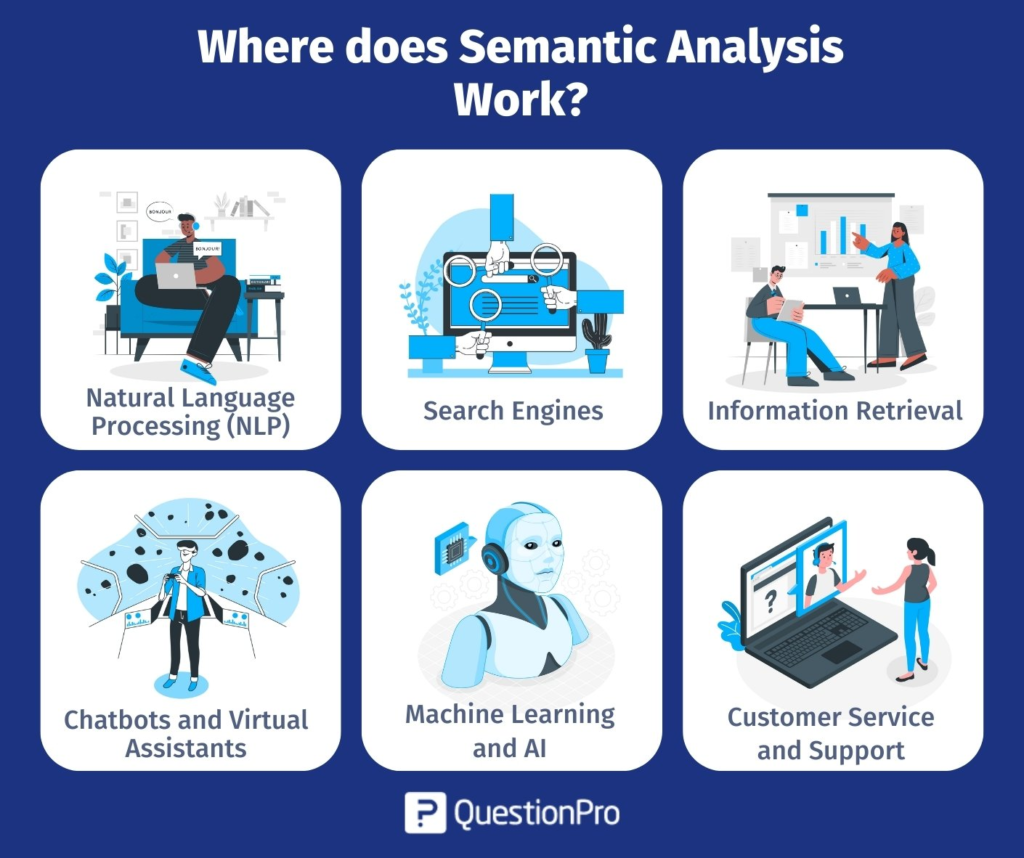
The sheer volume of online content forced search engines to rethink how relevance is determined.
Keyword matching alone produced too much noise, often surfacing pages that technically matched terms but failed users.
Over time, this eroded trust and satisfaction.
Something had to change.
Semantic intelligence offered a solution by allowing engines to evaluate usefulness, coherence, and intent alignment more effectively.
When users find what they need quickly, engagement improves and frustration drops.
That behavioral feedback now shapes rankings.
Search is no longer about retrieving pages. It is about resolving intent.
A fundamental change.
2: Core Technologies Powering Semantic AI Search
To understand how modern search works, you need to look beneath the interface and into the systems interpreting your queries.
Semantic AI search is not powered by a single breakthrough, but by several technologies working together to interpret meaning at scale.
Each plays a specific role, and together they explain why search results feel more accurate today.
Quietly powerful.
Very deliberate.
Natural language processing and intent parsing
Natural language processing allows search engines to break human language into structures machines can interpret reliably.
It identifies entities such as people, places, products, and concepts within your query or content.
More importantly, it evaluates how those entities relate to one another within context.
Sentiment and intent detection add another layer of understanding.
Is the query seeking advice, comparison, reassurance, or action?
That distinction matters.
Search engines now optimize for satisfying intent, not just matching phrases.
Ask yourself this.
What do you really want?
Vector embeddings and similarity matching
Once language is processed, both queries and content are converted into numerical representations called vectors.
These vectors exist in high dimensional space, allowing systems to compare meaning mathematically rather than textually.
Two pieces of content can be close in meaning even if they share few words.
This is where semantic AI search optimization becomes practical.
Search engines measure conceptual closeness, not word overlap.
A page answering the same problem clearly can rank even without exact phrasing.
Not identical.
But relevant.
Knowledge graphs and relationship mapping
Knowledge graphs provide structured understanding by mapping entities, attributes, and known relationships across vast datasets.
They help search engines recognize that concepts are connected even when language varies significantly.
This reinforces context and reduces ambiguity.
When your content aligns with these relationships, it gains credibility signals.
Search engines see coherence instead of isolated statements.
That consistency improves confidence in results returned to users.
Context matters.
More than ever.
Together, these technologies allow search systems to behave less like databases and more like informed assistants, responding to meaning rather than surface signals.
3: How Semantic AI Search Works Step by Step
When you submit a query, a modern search engine does far more than scan pages for matching words.
It begins a structured evaluation designed to understand what you want and how best to deliver it.
This process unfolds in clear stages, each building on the previous one.
Understanding these steps helps you see why semantic AI search optimization depends on clarity rather than tricks.
Step by step. No shortcuts.
Query analysis and intent classification
The first step is analyzing the query itself, not just its wording.
Search systems examine structure, phrasing, and known language patterns to infer intent.
Are you seeking information, comparing options, or ready to act?
This classification matters because each intent type expects a different kind of result. Informational queries favour explanations.
Transactional queries prioritize options and actions.
Navigational queries aim for a specific destination.
Misreading intent leads to irrelevant results.
So ask yourself.
What is the goal?
Content understanding beyond keywords
Once intent is identified, the engine evaluates content through topic modelling and entity analysis.
Instead of counting phrases, it looks for comprehensive coverage of the subject.
Are key entities present?
Are relationships between ideas clear?
Depth matters here.
Pages that explain concepts thoroughly tend to outperform those offering surface answers. Search engines recognize relevance through structure, coherence, and completeness.
This is where semantic AI search optimization rewards content written for understanding, not repetition.
More than text. Meaning.
Result ranking through semantic relevance
Finally, results are ranked based on semantic similarity between the query intent and the content quality and meaning.
Concept match strength plays a central role, along with confidence signals such as clarity, consistency, and user engagement patterns.
Search engines observe how users interact with results to refine future rankings. Do people stay, scroll, and engage?
Or do they leave quickly?
These behavioural signals reinforce relevance decisions over time.
Does it help?
That is the test.
Together, these steps allow search engines to deliver results that feel intuitive, accurate, and aligned with what you actually wanted when you searched.
4: Semantic Search vs Other Search Models
Understanding how semantic search differs from older models helps you see why search behavior has fundamentally changed.
It also explains why many once reliable tactics quietly stopped working.
Keyword Search vs Semantic Understanding
Traditional keyword search relies on literal matching between your query and indexed text.
If the words align, results appear, even when the meaning does not fully match.
This worked when queries were simple and expectations were low.
Not anymore.
Semantic understanding focuses on concepts, relationships, and intent behind the words you type.
It asks what you are really trying to solve, not just what you typed.
That is why synonyms alone are not enough. Replacing words does not change understanding. Meaning does.
Why does this matter to you?
Because modern search engines reward clarity of thought over repetition of phrases. Intent wins.
Lexical, Contextual, and Vector Search Compared
Lexical search excels at precision when terms are exact, such as product names or error codes.
Contextual search adds surrounding signals, including sentence structure and nearby terms, to refine relevance.
Helpful, but still limited.
Vector search goes further by mapping meaning mathematically.
It compares ideas rather than words, allowing systems to connect related concepts even when phrasing differs.
This is where semantic systems stand out.
Different tools. Different depth. Only one understands intent at scale.
Why Semantic AI Search Optimization Outperforms Older Methods
Semantic AI search optimization improves results because it aligns content with how people actually think and search.
Users find answers faster, which increases satisfaction and trust.
Studies consistently show lower pogo sticking when intent is satisfied early. Less bouncing. More engagement.
Search engines notice these signals.
Time on page increases. Interaction improves. Rankings follow.
You are no longer optimizing for algorithms alone.
You are optimizing for understanding. And that changes everything.
5: Real World Examples of Semantic Search in Action
Semantic search stops being theoretical the moment you see it work in everyday situations. Once you do, the difference feels obvious. Almost unavoidable.
Interpreting Related Concepts in Ecommerce
Imagine you search for “lightweight jacket for cold morning hikes.”
Traditional search would latch onto “jacket” and maybe “hiking.” Semantic systems go further.
They understand insulation types, breathability, weather resistance, and movement needs.
So you see fleece layers, softshells, and synthetic down options, not random winter coats.
system connects materials with use cases. It also reads intent. You want warmth without bulk. You want mobility.
That matters.
Modern ecommerce platforms use this approach to reduce returns and improve satisfaction.
In fact, retailers using semantic product search report conversion lifts of 15 to 30 percent, according to industry studies.
Relevance reduces friction. Less scrolling. Faster decisions.
And fewer regrets.
Context Aware Informational Searches
Now consider planning a trip. You search for “best time to visit Goa for quiet beaches.”
Semantic search reads location, seasonality, and personal intent. It understands you are not asking about nightlife.
Instead, it surfaces shoulder-season advice, lesser-known beaches, and weather patterns. Helpful context. Not noise.
The same applies to healthcare searches.
A query like “knee pain after running” is interpreted differently for a marathon trainee versus a sedentary user. Location, age signals, and phrasing all influence results.
Precision improves trust.
This is where semantic AI search optimization quietly changes how information feels.
It feels calmer. More aligned. Almost human.
Natural Language Question Handling

Source: GippLab
People no longer search in fragments.
They ask full questions.
Sometimes several at once. “What laptop should I buy for travel and light video editing under a budget?”
Semantic systems break natural language questions into constraints and priorities.
Portability. Performance. Price. Then they recombine them into useful answers.
No keyword stuffing required.
This is why voice assistants and AI search interfaces feel more capable now.
That’s because they handle conversational flow. They track follow-ups. They remember what you meant.
That is the shift.
From matching words to understanding you.
Is that not the whole point?
6: Practical Applications Across Industries
Semantic systems are not abstract theory anymore.
You see their impact wherever search quality directly affects decisions, speed, and outcomes.
That includes how you buy, learn, and publish today.
Ecommerce Discovery and Conversion Improvement
In ecommerce, semantic search improves discovery by matching intent to products, not just keywords.
A shopper searching for a lightweight running shoe is shown use cases, benefits, and fit preferences.
Not random listings.
This reduces irrelevant results and decision fatigue. Fewer scrolls. Faster choices.
Retail studies show intent driven search can lift conversion rates by 10 to 30 percent, simply by improving relevance.
That happens because the system understands what the buyer actually wants.
Not what they typed loosely.
Why does this matter to you? Because every irrelevant result is a lost sale waiting to happen.
Enterprise and Internal Knowledge Search
Inside enterprises, semantic search shortens the distance between questions and answers.
Employees no longer guess file names or exact phrasing.
They ask naturally.
Documents, policies, and insights surface based on meaning and context.
That reduces cognitive load and frustration. Productivity improves.
Gartner estimates knowledge workers spend up to 20 percent of their time searching for information.
Semantic systems cut that significantly. Less hunting. More thinking.
That shift compounds fast.
Content Platforms, Publishers, and AI Search Engines
For publishers and platforms, visibility now depends on clarity and completeness.
Semantic systems evaluate whether your content fully answers a topic, not whether it repeats phrases.
This is where semantic AI search optimization becomes practical.
Coverage depth, entity connections, and intent alignment determine reach.
Thin content fades quietly.
Authority is earned through completeness and coherence.
Not volume.
Today, cultivating trust in AI driven search is crucial
So what should you focus on?
Clear structure, clear answers, and clear purpose.
7: User Intent, The Core of Semantic AI Search Optimization
If semantic search had a single engine room, this would be it. User intent. Everything else builds around it.
Understanding Task Based Intent
When you search, you are rarely just looking for information. You are trying to complete a task.
Buy something. Learn something. Decide something.
Semantic systems focus on that underlying goal, not just the words you typed.
A search for “best protein powder” might signal comparison, trust evaluation, or even health concerns. Context fills the gaps.
That shift matters.
Instead of matching phrases, the system asks what outcome would satisfy you.
Intent reframes the query. It turns language into purpose.
Is that not how humans listen?
Query Categorization and Result Filtering
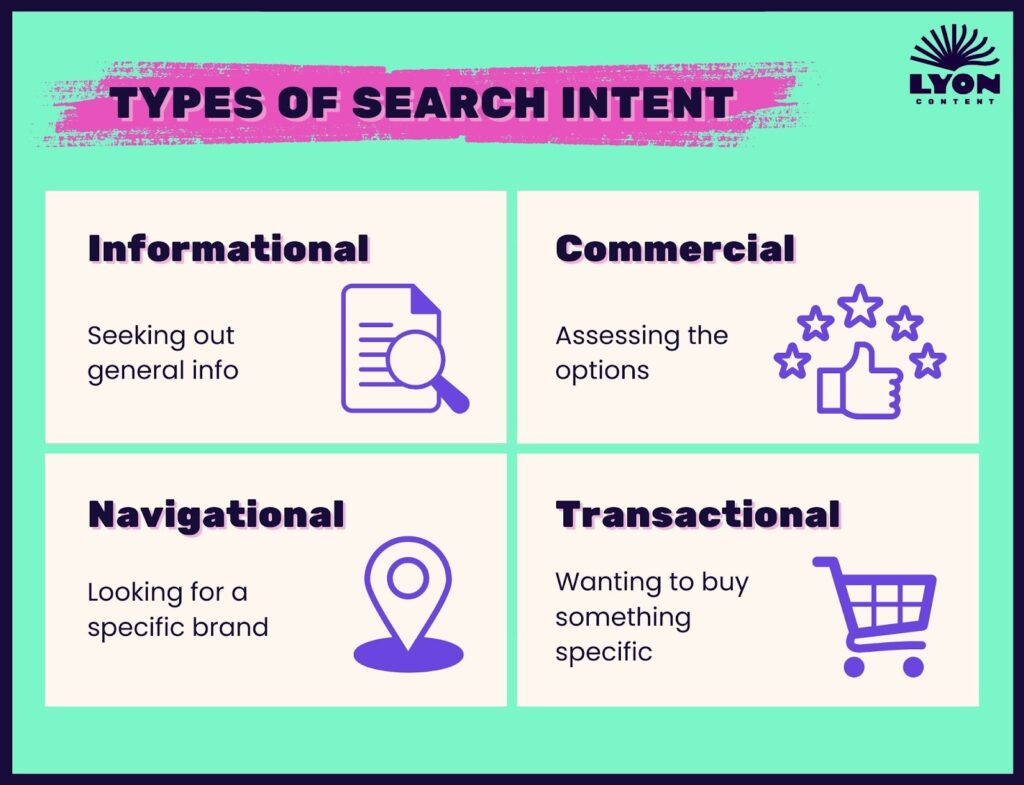
Source: LyonContentAgency
Once intent is inferred, queries are categorized early.
Informational. Transactional. Navigational. Sometimes a blend.
This early classification allows search systems to filter aggressively.
Buying guides are removed when you want definitions.
Product pages are prioritized when you are ready to act.
Noise drops fast.
Google has publicly stated that intent understanding plays a major role in ranking systems like RankBrain and BERT.
Fewer false matches lead to higher engagement and lower bounce rates. Numbers follow relevance.
Naturally.
This is where semantic AI search optimization becomes practical rather than abstract.
You optimize for clarity of purpose, not mechanical signals.
Why Intent Clarity Beats Keyword Density
Keyword density assumes repetition creates relevance.
Intent clarity assumes understanding creates trust.
Modern AI sides with the latter.
Content that answers the real question earns stronger confidence signals. Longer dwell time.
Fewer reformulations. Cleaner follow up queries. These are behavioral endorsements.
And AI notices.
You do not need to say the same phrase ten times if your explanation resolves the task completely. One clear answer beats a dozen padded paragraphs.
So ask yourself this.
Does your content help someone finish what they started?
That answer determines visibility far more than keyword counts ever did.
8: What Semantic Search Is Not, Clearing the Confusion
Semantic search is often misunderstood because it is described using familiar technical terms.
That creates false equivalence.
Knowing what it is not helps you align expectations and strategy correctly.
Why NLP Alone Does Not Equal Semantic Search
Natural language processing handles tokenization, part of speech tagging, and basic synonym handling. These functions help systems read text, but they do not create understanding.
Rules process language. Intelligence interprets it.
NLP can identify related words, yet it cannot reliably infer intent or contextual goals on its own.
That distinction matters. A lot.
True semantic systems combine NLP with embeddings, context modeling, and feedback signals.
That is where meaning emerges beyond rules. Otherwise, you are still matching patterns.
So if NLP is present, is that enough? Not even close.
The Limits of Keyword Expansion Techniques
Keyword expansion tries to simulate understanding by adding related phrases.
It assumes equivalence between terms that look similar.
That works only at the surface level.
Meaning does not scale through substitution.
Two queries can share words but seek different outcomes. Treating them as equal confuses relevance.
This is why expanded keyword lists often inflate content without improving performance. More words. Less clarity.
Search engines notice. Users do too.
Semantic Search as Concept Matching, Not Text Matching
Semantic search matches concepts the way humans do.
If you ask a skilled assistant for guidance, they interpret your situation, not your phrasing.
They connect intent, constraints, and context.
AI systems trained on semantic models behave similarly.
They recognize patterns of meaning across varied expressions.
That is why semantic AI search optimization rewards clear explanations over clever wording.
You are no longer writing for text matching. You are communicating intent.
And that is a very different conversation.
FAQs
What technology is used in semantic AI search?
Semantic AI search relies on natural language processing, machine learning, and vector embeddings. These technologies allow the system to understand context, intent, and relationships between concepts rather than just matching words.
How does semantic AI search differ from traditional SEO?
Traditional SEO focuses on keywords, backlinks, and on-page optimization for ranking. Semantic search prioritizes user intent, content relevance, and conceptual understanding, making content quality and clarity more important than exact phrase repetition.
Is vector search the same as semantic search?
Not exactly. Vector search is a core technology used in semantic search, mapping content and queries into numerical representations. Semantic search combines vectors with NLP and contextual signals to understand meaning and intent.
What are examples of semantic AI search tools and APIs?
Popular tools include OpenAI embeddings, Pinecone, Weaviate, and Elasticsearch with vector capabilities. These tools allow developers to implement semantic search across websites, apps, and internal databases.
How does semantic search improve user experience?
Semantic search delivers more accurate, relevant, and context-aware results. Users find answers faster, encounter fewer irrelevant listings, and experience less frustration during their search journey.
Can small websites benefit from semantic AI search optimization?
Yes. Even small sites can improve visibility and engagement by aligning content with intent and concept coverage. Semantic optimization helps compete with larger sites by focusing on relevance rather than volume.
Does semantic search replace keywords completely?
No. Keywords still play a role in signaling topics and structure. However, semantic search reduces over-reliance on exact matches, emphasizing meaning, context, and user intent instead.
Related Posts
AI Search Optimization — Why Old SEO Won’t Save You Now
Authenticity Signals in AI Search: Why Users Trust Real Voices
AI Search Trust Crisis: Why SEO Must Change Fast
AI Content Ranking Factors: Powering Smart Discovery in 2026
Conclusion
Semantic AI search optimization is no longer optional for content visibility in AI driven search ecosystems.
The shift from words to meaning has redefined what relevance truly is.
Today, clarity of intent, well-structured content, and topic depth determine whether users—and AI—trust your work.
Writing now demands that you focus on understanding your audience’s questions, not just feeding algorithms.
Precision of thought matters more than keyword density.
Looking ahead, search will continue evolving to mimic human comprehension, rewarding content that communicates insight and context naturally.
Your goal is to be understood, not merely found.