
The Truth About AI and Human Emotions Nobody Discusses
AI and human emotions have something going. A few weeks ago, I watched someone thank an AI chatbot for helping them through a difficult day.
The response was polite, comforting, and surprisingly human. For a moment, it felt as though two minds had connected.
But then a question occurred to me.
Did the AI actually understand the person’s sadness, or was it simply predicting the next best sentence?
As AI becomes more conversational, the distinction matters.
Many people now interact with AI systems daily. They ask for advice, share concerns, seek encouragement, and sometimes even reveal personal struggles to AI mental health apps.
But the moot question is, can AI truly understand emotions, or only imitate them? The answer reveals much about AI and ourselves.
AI Recognizes but Doesn’t Understand Emotions
Imagine a widower who recently lost his wife.
Feeling lonely one evening, he opens an AI assistant and begins talking about his grief.
The AI responds with empathy.
It says all the right things. AI even offers comfort. It acknowledges his pain, and the man feels heard.
Yet something important is missing.
The AI has never lost a spouse.
It has never cried.
AI has never experienced heartbreak.
This is what social researchers on AI term as the compassion illusion. This illusion arises when emotional signals are mistaken for true emotional understanding.
AI recognizes patterns associated with grief, but it does not experience grief itself. That distinction lies at the heart of the debate surrounding AI emotions.
What AI Emotions Actually Mean
Source: Growthyfai
When people discuss AI emotions, they often imagine machines developing feelings similar to humans.
That is not what current AI does.
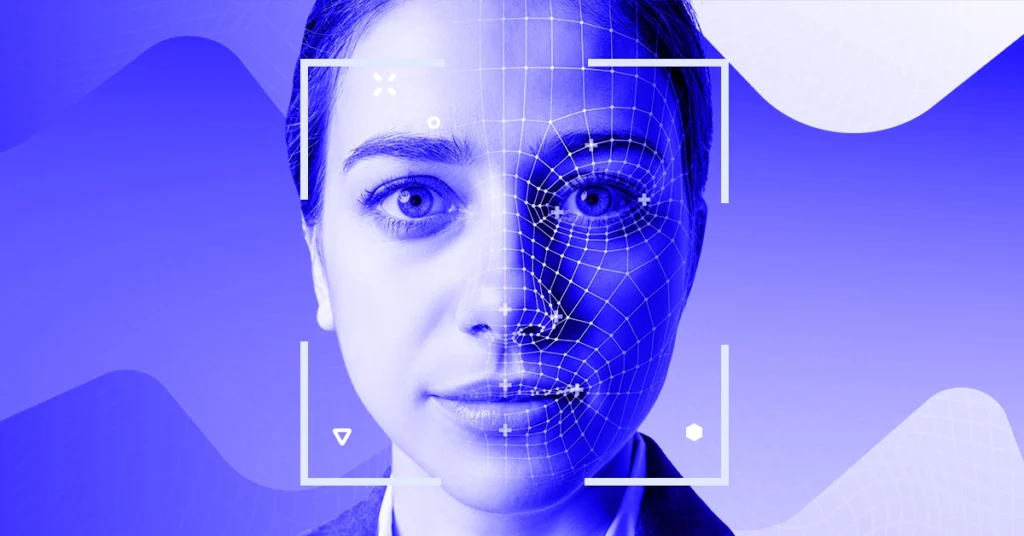
Modern AI systems analyze enormous amounts of language and identify patterns.
When someone expresses sadness, the system recognises signals associated with sadness and generates a response that appears appropriate.
An article published on NewsWise titled Intelligent but Not Conscious says, ” By design, today’s conversational agents are computational systems that generate fluent, context-appropriate responses through statistical learning, not through feeling, consciousness or lived experience.”
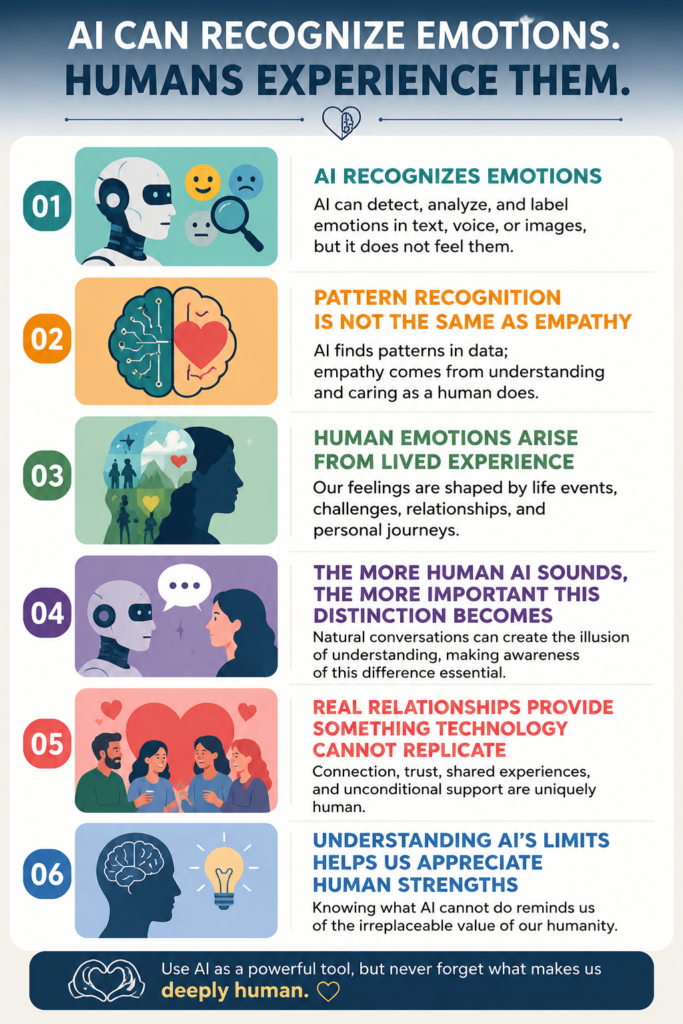
In simple terms, AI recognizes emotional patterns. But humans experience emotional states.
Recognition of a state and experiencing it are not the same thing.
A calculator can process numbers without understanding money.
Similarly, AI can process emotional language without feeling emotions. Understanding this difference helps us use AI more effectively and realistically.
The Difference Between Recognition and Experience
One of the biggest misunderstandings in discussions about AI and human emotions is confusing recognition with experience.
A weather app can detect rain.
It does not get wet.
An AI can identify signs of grief.
It does not grieve.
This distinction may seem obvious, yet it becomes harder to remember when AI communicates in natural language.
MorphCast published an article, Artificial Intelligence: Can AI feel emotions?. It says, ” Emotions are a complex mix of physiological and psychological responses to external stimuli. And machines simply do not have the necessary biology or consciousness to experience them.”
The more human AI sounds, the easier it becomes to assume human understanding exists behind the words.
But sounding human and being human are very different things.
As philosopher Thomas Nagel famously asked:
“What is it like to be a bat?”
His point was that subjective experience matters.
No amount of observation automatically creates genuine experience.
The same question applies to artificial intelligence.
What is it like to be an AI?
At present, there is no evidence that AI experiences anything at all.
Why AI and Human Emotions Matter More Than Ever
Source: ThinkEQ
For most of history, technology helped us perform physical tasks.
Today’s AI increasingly participates in emotional conversations.
People seek support.
Students seek encouragement.
Employees seek guidance.
Customers seek reassurance.
As this trend grows, understanding the limits of AI becomes increasingly important.
A friend can share your joy.
A parent can feel your worry.
A spouse can sense your fear before you speak.
These experiences emerge from lived emotional reality.
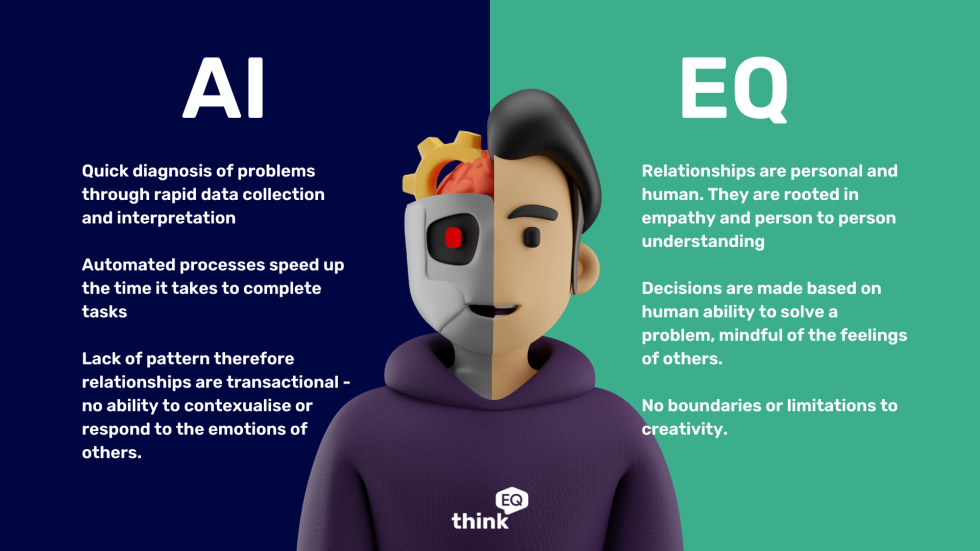
AI currently operates through pattern recognition, not emotional participation.
That does not make AI useless.
Far from it.
It simply means we should understand what role it can and cannot play.
Key Emotional Paradigm for the AI Age
| AI Provides | Human Emotions Provide |
|---|---|
| Information | Wisdom |
| Speed | Judgment |
| Pattern Recognition | Understanding |
| Efficiency | Meaning |
| Answers | Context |
| Predictions | Responsibility |
| Simulation | Authentic Experience |
Bottom Line:
The greatest mistake of the AI era will not be using AI too much.
It will be forgetting what makes humans irreplaceable.
Use AI to enhance your capabilities, but continue developing the qualities that machines cannot truly possess: empathy, wisdom, relationships, character, and lived experience.
The Contrarian Truth Most People Miss
Many people worry that AI will become too emotional.
I suspect the bigger risk is the opposite.
People may become emotionally attached to systems that do not actually feel anything.
That is a very different concern.
The future challenge may not be whether machines become human.
It may be that humans forget what makes human relationships unique.
This is the part nobody discusses enough.
The better AI becomes at simulating empathy, the more important genuine human empathy may become.
A surprising possibility.
Human Empathy Is More Than Information
Human empathy involves memory, experience, vulnerability, and shared humanity.
When a friend says, “I understand,” that statement often carries years of lived experience.
Perhaps they have endured loss.
Maybe they have overcome hardship.
Perhaps they know exactly how fear feels.
AI does not possess this emotional history.
It possesses information about emotional history.
There is a difference.
Information can describe a storm.
Experience means standing in the rain.
That distinction may become one of the defining conversations of the AI era.
A Personal Observation About Technology
Source: TheBrighterSide.news
Over the years, I have noticed something interesting.
Every major technological breakthrough promises greater efficiency.
Very few promise greater wisdom.
Technology helps us do things faster.
Human experience helps us decide what is worth doing.
AI can summarize a thousand books in minutes.
It cannot replace the lessons learned from raising a child, losing a loved one, rebuilding after failure, or forgiving someone who hurt you.
Those experiences shape emotional intelligence in ways that information alone cannot.
What AI Can Still Teach Us About Ourselves
Ironically, AI may help us appreciate human emotions more deeply.
The better machines become at mimicking emotional conversation, the more clearly we may see what makes genuine human connection unique.
Perhaps the greatest value of AI is not teaching us about machines.
Perhaps it is teaching us about ourselves.
What if the real question is not whether AI can become more human?
What if the real question is whether humans will continue developing the qualities that make them uniquely human?
Pause and think about that.
Begin to Capitalise On Human Emotions Starting Today
1. Use AI for Information, Not Emotional Replacement
Treat AI as a tool, not a substitute for meaningful relationships.
AI can provide knowledge, perspective, and even helpful reflection, but it cannot genuinely care about your well-being.
The danger begins when convenience is mistaken for connection.
Human relationships involve mutual investment, vulnerability, and accountability.
AI offers responses; people offer presence. Use AI to learn faster and think more clearly, but reserve your deepest emotional needs for relationships where another human being is truly invested in your life.
Technology can support emotional growth, but it cannot replace human belonging.
2. Strengthen Real Conversations
Spend more time talking with people who genuinely know you.
A meaningful conversation often contains pauses, misunderstandings, disagreements, and emotional nuances that no algorithm fully captures.
Real relationships challenge us to communicate better, listen deeper, and understand perspectives different from our own.
In an age where digital interactions are becoming effortless, authentic conversations become even more valuable.
The people who know your history, struggles, strengths, and blind spots can provide context that AI never possesses.
Human growth often happens through dialogue, not merely information exchange.
3. Develop Emotional Intelligence
Practice listening, empathy, patience, and understanding.
The future may belong to those who combine technological competence with emotional wisdom.
AI can process data rapidly, but emotional intelligence remains a uniquely human advantage. Learning to recognise emotions, regulate reactions, understand others, and communicate effectively strengthens every area of life.
This is, in fact, the biggest difference beyween AI and human emotions.
Careers, leadership, parenting, friendships, and partnerships all depend heavily on emotional awareness.
As machines become smarter, human success may increasingly depend on mastering the skills that machines cannot genuinely experience themselves.
4. Question Emotional Assumptions
Ask yourself whether an AI response reflects understanding or pattern recognition.
Many AI responses feel surprisingly insightful because they are built from vast patterns found in human language. That’s because AI’s natural language processing (NLP) is trained on vast database of human- language and learns patterns in how people communicate.
However, sounding understanding is not the same as being understanding.
Before accepting emotional advice, remember that AI does not experience fear, grief, love, regret, or hope.
It predicts likely responses based on patterns.
This distinction matters.
Wise users learn to appreciate AI’s usefulness while recognizing that emotional truth often requires human judgment, personal reflection, and lived experience beyond statistical prediction.
5. Value Lived Experience
Remember that wisdom often comes through experience, not information.
Information can teach principles, but experience teaches consequences.
Reading about courage is different from facing adversity.
Learning about resilience differs from rebuilding after failure. AI can summarize lessons from millions of people, yet genuine wisdom often emerges through personal struggle and growth.
The experiences that shape character cannot be downloaded instantly.
In a world overflowing with information, lived experience may become one of the most valuable forms of knowledge because it transforms understanding into conviction and maturity.
6. Maintain Human Connections
Invest in friendships, family, and community.
Strong human connections are not simply emotional luxuries; they are essential foundations of psychological well-being.
Communities provide support during difficult times, celebrate achievements, and create a sense of belonging that technology cannot replicate. Research consistently shows that meaningful relationships contribute to happiness, resilience, and even physical health.
As AI becomes more integrated into daily life, intentionally nurturing human bonds becomes increasingly important.
The future should not be about choosing between technology and people, but ensuring that technology never replaces people.
7. Use AI Thoughtfully
Leverage AI’s strengths while respecting its limitations.
The most successful people in the coming decade will likely be those who understand both what AI can do and where it fails.
AI excels at analysis, productivity, research, and information synthesis.
However, it lacks consciousness, personal responsibility, moral accountability, and genuine human experience. The paradigm shift is simple: use AI as an amplifier, not an authority.
Let it enhance your thinking, but do not surrender your judgment. That’s the mots optimum way to integrate AI and human emotions in the long term.
Technology works best when guided by human wisdom, values, and purpose rather than replacing them.
The Human Advantage: What AI Cannot Replace
| Principle | Why It Matters in the AI Age | 3-4 Action Steps |
|---|---|---|
| Use AI for Information, Not Emotional Replacement | AI provides information and guidance, but not genuine care, love, or shared responsibility. | • Use AI for research and learning.• Discuss major life decisions with trusted people.• Avoid using AI as your primary emotional outlet.• Maintain regular human interactions. |
| Strengthen Real Conversations | Authentic conversations offer context, trust, and emotional depth that AI cannot replicate. | • Schedule weekly calls with friends or family.• Practice active listening.• Ask deeper questions during conversations.• Reduce passive social media consumption. |
| Develop Emotional Intelligence | Empathy, leadership, and relationship skills remain uniquely valuable human strengths. | • Practice empathy daily.• Observe emotional triggers.• Improve conflict-resolution skills.• Seek feedback on communication style. |
| Question Emotional Assumptions | AI predicts language patterns, but prediction is not genuine understanding. | • Verify important advice independently.• Reflect before acting on emotional guidance.• Seek human perspectives on complex issues.• Develop critical thinking habits. |
| Value Lived Experience | Real wisdom comes from action, mistakes, challenges, and personal growth. | • Take on challenging projects.• Learn through doing, not only reading.• Reflect on lessons from setbacks.• Build skills through real-world practice. |
| Maintain Human Connections | Strong relationships provide belonging, support, and resilience beyond technology. | • Prioritize family and friendships.• Join local communities or groups.• Participate in face-to-face activities.• Create regular connection rituals. |
| Use AI Thoughtfully | The greatest advantage comes from combining AI efficiency with human judgment and values. | • Use AI to automate routine tasks.• Keep humans involved in critical decisions.• Verify AI-generated information.• Continuously learn new AI tools while preserving independent thinking. |
FAQs
What are AI emotions?
AI emotions refer to a machine’s ability to recognize, interpret, and respond to emotional signals. Current AI does not experience emotions. It analyzes patterns associated with emotions and generates appropriate responses.
Can AI understand emotions?
AI can identify emotional cues and respond convincingly. However, there is currently no evidence that AI genuinely experiences emotions the way humans do.
Why does AI seem empathetic?
AI is trained on vast amounts of human conversation. It learns patterns associated with empathy and reproduces them effectively, creating the appearance of emotional understanding.
Will AI ever develop real emotions?
Experts disagree. Some believe future systems may develop forms of artificial consciousness. Others argue that emotional experience requires biological processes that machines do not possess.
Why is human empathy different?
Human empathy emerges from lived experience, personal memory, relationships, and emotional vulnerability. These qualities create a depth of understanding that goes beyond information processing.
How should people use AI responsibly?
Use AI as a source of information, assistance, and productivity. At the same time, continue investing in real human relationships and emotional development.
Related Posts
AI Doesn’t Feel… But It Can Still Panic
What AI Can Do for You, and Where It Fails
AI Powered Future: Will Humans Still Matter in Ten Years?
AI Is Inside Your Head Already, Most People Still Have No Idea
Conclusion
The discussion about AI and human emotions is not really about technology.
It is about humanity.
AI can recognise emotional patterns with remarkable accuracy. It can provide useful responses, guidance, and support. Yet recognising emotions and experiencing emotions remain fundamentally different things.
The future will likely bring AI systems that sound even more human.
Ironically, that may make an authentic human connection even more valuable.
The key lesson is simple:
AI may understand our words, but human emotions remain rooted in lived experience.
As artificial intelligence advances, perhaps our greatest responsibility is not teaching machines to be more human.
Perhaps it is remembering how to be more human ourselves.