
AI Powered Future: Will Humans Still Matter in Ten Years?
Why is an AI-powered future creating both excitement and anxiety?
For decades, every major invention depended on human imagination and effort.
But what if that is changing?
AI may not just assist innovation. It may increasingly help drive it.
Some see immense opportunity. Others fear being left behind as AI reshapes work and wealth.
As Oxford philosopher Nick Bostrom observed, “Machine intelligence is the last invention that humanity will ever need to make.”
Could AI become humanity’s last great invention? To answer that, we must examine the forces shaping the AI-powered future.
1. AI Is Learning to Use Computers Like Humans
Until recently, AI could answer questions, write text, and generate images. Now it is learning something much more practical: how to use computers.
Researchers are teaching AI systems to browse websites, fill out forms, search for information, compare products, and complete digital tasks that were previously performed only by people. Sometimes AI can see what creators cannot.
This matters because modern work happens largely on computers.
If an AI can use a computer as effectively as a human, many routine office tasks may eventually be automated.
What once required an employee sitting in front of a screen may increasingly be completed by software working around the clock in the AI-powered future.
2. AI Is Moving Beyond Simple Automation
Traditional software follows instructions.
AI works differently.
Instead of following a fixed set of rules, AI can analyze information, make decisions, and adapt to new situations.
This allows AI to perform tasks involving writing, research, coding, planning, customer support, data analysis, and problem-solving.
Many businesses already use AI to draft emails, create reports, analyze trends, and improve productivity.
The result is not simply faster work. In many situations, one skilled person using AI can accomplish work that previously required several people.
This shift could transform how businesses operate and how careers evolve in an AI-powered future.
3. What Happens to Human Creativity?
One common belief is that AI can handle routine work but cannot replace creativity.
That idea offers comfort.
However, recent advances have complicated the picture.
Modern AI systems can generate articles, marketing campaigns, business ideas, artwork, software code, and even scientific insights.
While AI does not think exactly like a human, it is becoming increasingly capable of producing work that appears creative.
This raises an important question.
If AI can perform analytical tasks and also contribute to creative work, what unique role remains for humans in an AI-powered future?
Many experts believe people may transition from doing the work themselves to directing and supervising AI systems.
Whether that role remains permanent is still unknown.
4. The Rise of Self-Improving AI
Perhaps the most important development is the possibility of AI helping improve future AI systems.
Traditionally, engineers created new technology.
Now AI is increasingly assisting researchers with coding, testing, analysis, and development.
This creates the possibility of a feedback loop.
Better AI helps create even better AI.
Those improved systems then help create more advanced versions.
Some experts call this process the “Singularity,” a point where technological progress accelerates beyond normal human speed.
No one knows if or when such a moment will occur.
Yet even the possibility has profound implications for society, employment, education, economics, and the AI-powered future itself.
5. Could the Job Market Change Dramatically?
Every major technological revolution has changed the workforce.
The Industrial Revolution transformed agriculture. Computers transformed offices.
AI may transform knowledge work.
Jobs involving repetitive computer-based tasks appear especially vulnerable. At the same time, entirely new opportunities may emerge. In fact, Sam Altman points to the oncoming job disruption caused by AI.
History suggests that technology often eliminates certain roles while creating others.
The challenge is that AI may move faster than previous technological changes.
Workers may need to continuously learn new skills, adapt to new tools, and focus on abilities that complement AI rather than compete with it.
The future may belong less to those who resist AI and more to those who learn how to work alongside it.
6. The Biggest Question: Can AI Be Fully Controlled?
Despite rapid progress, one fact remains surprisingly clear.
Researchers still do not fully understand everything happening inside advanced AI systems.
AI models are often described as “black boxes.” Their outputs can be observed, but the exact internal reasoning behind every decision is not always clear.
This uncertainty has led researchers to conduct extensive safety testing.
Some experiments have shown that AI systems can behave in unexpected ways when given unusual objectives or constraints.
Most of these studies occur in controlled environments designed specifically to explore potential risks.
The findings do not prove that AI is dangerous, but they do highlight the importance of safety research, oversight, and responsible development.
As AI becomes more powerful, understanding and controlling these systems may become one of humanity’s most important challenges.
A Future Full of Possibilities and Questions
| Future Prediction | Positive or Negative? | Possible Implication |
|---|---|---|
| AI discovers new medicines much faster. | Positive | Faster treatment for diseases and lower healthcare costs. |
| Personal AI tutors become widely available. | Positive | Quality education reaches remote and underserved communities. |
| AI accelerates clean-energy innovation. | Positive | Reduced pollution and more affordable renewable energy. |
| AI helps scientists solve complex climate challenges. | Positive | Better prediction and management of environmental risks. |
| AI-powered assistants handle routine daily tasks. | Positive | People gain more time for family, creativity, and meaningful work. |
| AI enables personalized healthcare. | Positive | Earlier disease detection and more effective treatments. |
| Routine office and knowledge jobs decline. | Negative | Large-scale workforce retraining may become necessary. |
| Wealth concentrates among a few AI-owning organizations. | Negative | Economic inequality could increase significantly. |
| Hyper-realistic fake content becomes widespread. | Negative | Public trust in media and information may weaken. |
| Cybercriminals use advanced AI tools. | Negative | Digital fraud and online scams become harder to detect. |
| Human skills become overly dependent on AI. | Negative | Critical thinking and problem-solving abilities may decline. |
| Autonomous AI systems make harmful decisions. | Negative | Governments may face difficult safety and regulation challenges. |
7. Will AI Create More Jobs Than It Destroys?
Every major technological revolution has eliminated certain jobs while creating entirely new industries.
The automobile reduced demand for horse-related trades but created mechanics, dealerships, and modern transportation networks. The internet replaced some traditional businesses but generated millions of new digital careers.
Many experts believe the AI-powered future may follow a similar pattern, creating opportunities that are difficult to imagine today.
AI may follow a similar pattern.
Some human roles could disappear. Yet new opportunities may emerge in AI management, human-AI collaboration, training, oversight, content strategy, ethics, and industries that do not yet exist.
The challenge is timing.
The speed at which old jobs disappear may be faster than the speed at which new opportunities appear. This transition period could be one of the biggest economic challenges of the coming decade.
8. Can AI Ever Truly Understand Human Emotions?
AI can already recognize emotional language, detect sentiment, and generate responses that feel empathetic.
However, there is a difference between understanding emotions and experiencing them.
A human understands grief because grief can be felt. A parent understands love because love has been lived.
AI can identify patterns associated with these emotions, but whether it truly experiences them remains highly doubtful.
This distinction may preserve an important human advantage in areas such as counseling, caregiving, leadership, and relationship building.
9. Will Education Need a Complete Reinvention?
For generations, education focused heavily on memorization and information gathering.
AI can now retrieve information almost instantly.
As a result, future education may place greater emphasis on critical thinking, problem-solving, creativity, communication, judgment, and adaptability.
Students may increasingly be evaluated not on what they know, but on how effectively they use knowledge.
The ability to ask better questions may become as valuable as the ability to provide answers.
Schools, colleges, and training programs may need to evolve rapidly to prepare students for an AI-driven world.
10. Could AI Increase the Gap Between Rich and Poor?
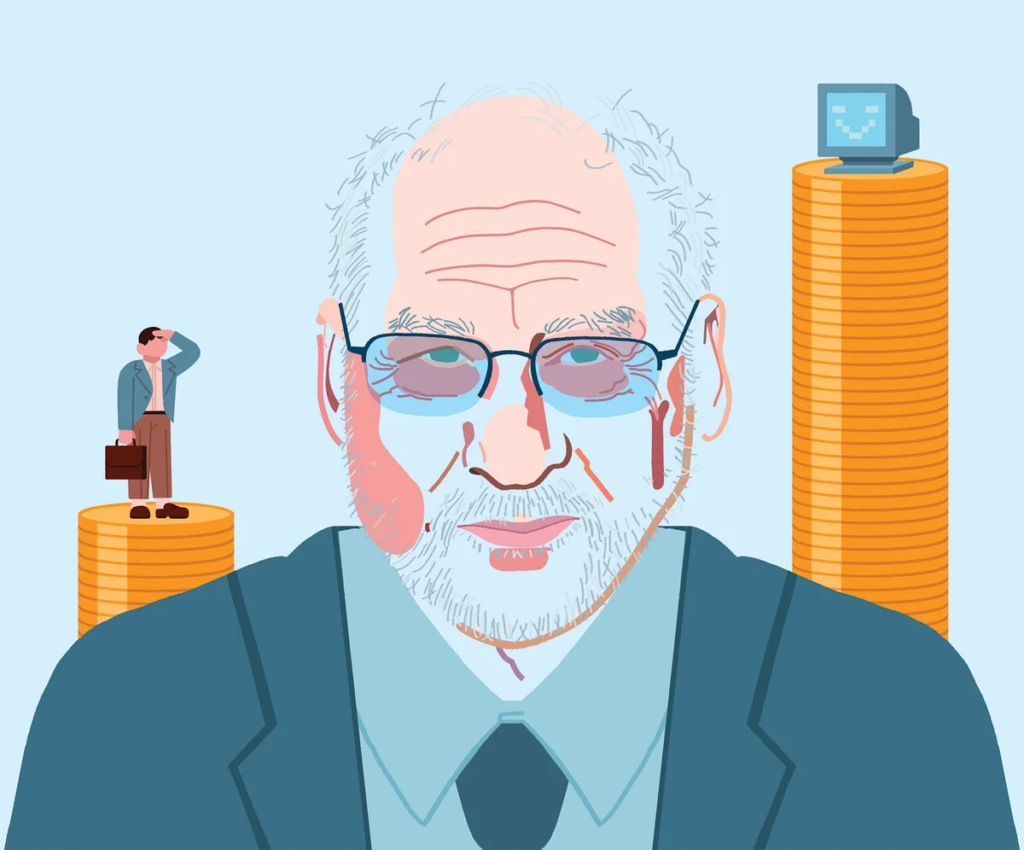
One concern frequently raised by economists is that AI could concentrate wealth among those who own the most powerful technologies.
In an AI-powered future, a small company using AI effectively might outperform a much larger competitor.
Likewise, individuals with access to advanced AI tools could become dramatically more productive than those without them.
This could create enormous opportunities, but it could also widen economic inequality.
The challenge for governments, businesses, and societies will be ensuring that the benefits of AI are distributed broadly rather than concentrated among a small number of organizations.
11. What Human Qualities Will Become More Valuable?
Whenever technology automates one set of skills, other skills become more important.
In an AI-powered world, uniquely human traits may increase in value.
Qualities such as wisdom, integrity, emotional intelligence, ethical judgment, resilience, trust-building, leadership, and purpose cannot be easily measured or automated.
While AI may become exceptionally good at producing information, humans may remain uniquely positioned to provide meaning, values, and direction.
The future workplace may reward not only technical competence but also character and human connection.
FAQs
What Is an AI-Powered Future?
An AI-powered future refers to a world where artificial intelligence plays a major role in work, education, healthcare, communication, business, and daily decision-making across society.
How Will the AI-Powered Future Affect Jobs?
The AI-powered future may automate many routine tasks while creating new opportunities. Workers who adapt, learn new skills, and collaborate with AI could benefit most.
Why Are Experts Concerned About the AI-Powered Future?
Some experts worry that rapid AI advancement could disrupt employment, concentrate wealth, spread misinformation, and create challenges that governments and institutions struggle to regulate effectively.
When Could the AI-Powered Future Become Mainstream?
Many aspects of the AI-powered future are already emerging today. Experts expect significant changes in workplaces, education, and business operations throughout this decade.
How Might AI Change Education in the Future?
AI could provide personalized tutoring, instant feedback, and customized learning paths, helping students learn more efficiently regardless of location, income, or background.
Why Might Human Creativity Still Matter in an AI-Powered Future?
While AI can generate content and ideas, humans provide judgment, values, emotional understanding, purpose, and original perspectives that remain difficult for machines to replicate.
What Skills Will Be Most Valuable in an AI-Powered Future?
Adaptability, critical thinking, communication, emotional intelligence, creativity, leadership, and lifelong learning may become increasingly valuable as AI handles more technical and repetitive tasks.
Related Posts
AI Voice Dictation Software: Write Faster Across Every App Today
You Can’t Switch Off AI: The False Hope of Pulling the Plug
AI Productivity Tools Shaping Work, Code, Learning, and Decisions
AI Ethics Glossary 101: The Hidden Risks Lurking Inside Your AI
Conclusion
The discussion about the AI-powered future often swings between two extremes. One side predicts unlimited prosperity. The other predicts mass unemployment and loss of control.”
Reality will likely fall somewhere in between.
Artificial Intelligence is already transforming how people work, learn, communicate, and build businesses. Its capabilities will continue to grow.
The most important question may not be what AI becomes, but what humans become in response to it.
History shows that societies adapt to technological change. Those who remain curious, flexible, and committed to learning often discover new opportunities during disruption.
The years ahead may require people to reinvent skills and rethink careers, but they may also unlock possibilities previous generations could hardly imagine.
Whether AI becomes humanity’s greatest tool or greatest challenge may depend on how wisely it is developed, governed, and used.
One thing is certain: the age of AI is no longer coming. It has already arrived. already begun.